
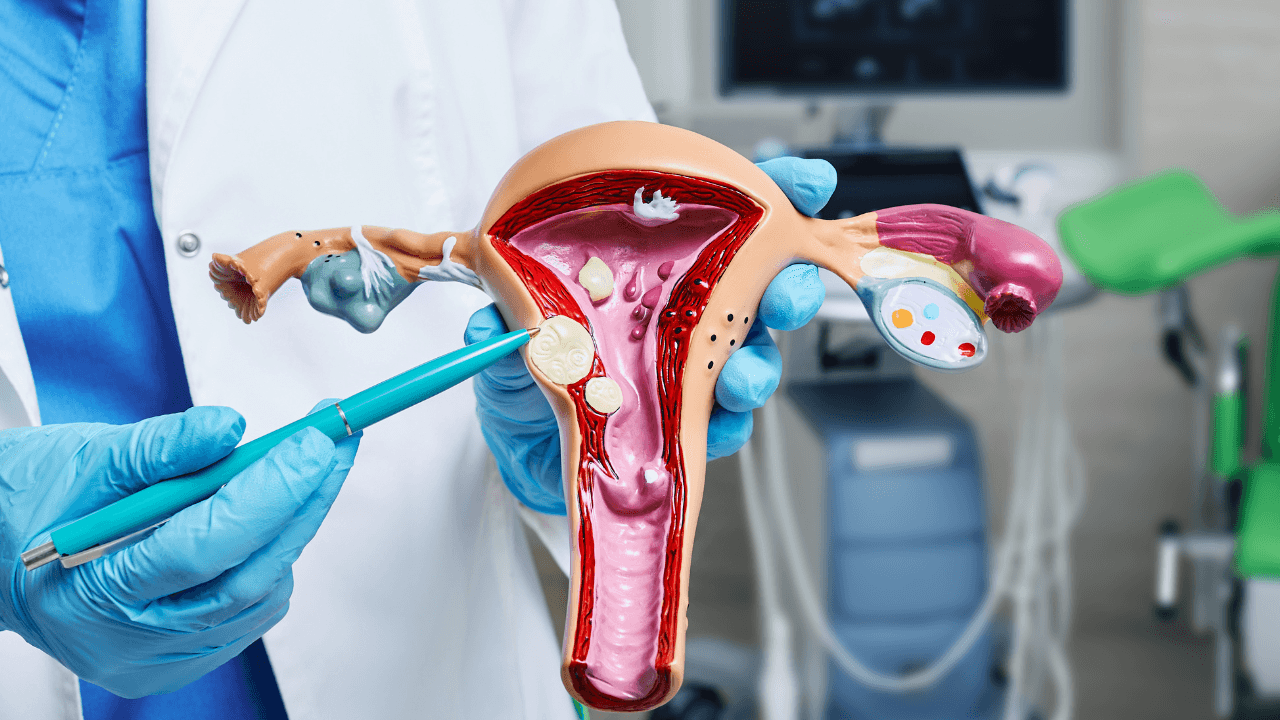
Hearing that an ultrasound has found a fibroid can bring worries about surgery. Fibroids are common and many cause no symptoms for years. The right approach depends on your symptoms, the fibroid and your pregnancy plans.
What is a fibroid?
A fibroid is a benign growth of the uterine muscle and is often found during a routine examination. Decisions depend on whether it causes heavy periods, anemia, pelvic pain, frequent urination or constipation, as well as its size, growth, and location. Submucosal fibroids grow toward the uterine cavity, intramural ones grow within the muscle, and subserosal ones grow on the outer surface. Age and pregnancy plans also matter. Fibroids often shrink after menopause. See What Are Fibroids?.
When is monitoring enough?
Monitoring is often reasonable when a fibroid causes no symptoms, does not distort the cavity and is not growing rapidly. ACOG recognizes observation as an option for asymptomatic fibroids. Your doctor can tailor examinations and ultrasound follow-up to the size and location. Increased bleeding, anemia, pressure symptoms, urinary or bowel changes, substantial growth, or growth or bleeding after menopause warrant reassessment.
What can medicines do?
Medicines usually control symptoms or temporarily shrink fibroids. Symptoms often return after stopping treatment. Medicines may be useful close to menopause or while preparing for surgery.
Reducing heavy bleeding
- Tranexamic acid: A nonhormonal medicine used on menstrual days.
- Hormonal treatments: Birth control pills or progestins may reduce bleeding.
- Hormonal intrauterine device: It can markedly reduce bleeding when the uterine cavity is not distorted.
Temporarily shrinking fibroids
- GnRH analogues: Temporarily lower ovarian hormone levels, which can shrink fibroids and suppress bleeding. Because of effects on bone density, they are generally used short term, often to help correct anemia before surgery.
- Oral GnRH antagonists: Trials found substantial reductions in fibroid-related bleeding with combination therapy that includes hormone add-back. Availability and suitability vary.
Your doctor considers side effects and contraindications after an examination and blood tests.
Nonsurgical procedures
- Uterine artery embolization: An interventional radiologist inserts a catheter into an artery and blocks the blood supply to the fibroids to reduce their size and symptoms.
- Radiofrequency ablation or focused ultrasound: Selected centers use heat to treat fibroids in suitable patients.
Evidence about future pregnancy is limited, so these procedures generally are not the first choice for women planning pregnancy. Symptoms may recur and further treatment may be needed.
When is surgery considered?
Surgery may be appropriate for fibroids that grow into the uterine cavity and cause heavy bleeding or reproductive problems, for bleeding and anemia despite medication, or for pressure on nearby organs, such as urinary tract dilation, frequent urination or severe constipation. Fibroids thought to contribute to infertility also warrant assessment. Rapid growth or growth after menopause warrants further evaluation, including consideration of rare malignant tumors.
A fibroid projecting into the cavity can often be removed through the cervix, without an abdominal incision. See Hysteroscopic Surgery. Myomectomy removes fibroids while preserving the uterus. Depending on their location and number, it can be performed laparoscopically, robotically, vaginally or through open surgery. See Uterus-Preserving Fibroid Surgery and Minimally Invasive Fibroid Surgery. Risks include bleeding, infection, injury to nearby organs and recurrence.
When should you seek help?
See a gynecology specialist if you need to change pads or tampons every 1–2 hours, have fatigue or palpitations that could indicate anemia, experience persistent pelvic pressure or pain, develop frequent urination or constipation, have difficulty conceiving or recurrent miscarriages, or experience any bleeding after menopause.
Seek emergency care for very heavy ongoing bleeding, dizziness or feeling faint, or sudden severe abdominal pain.
Choosing an approach
Observation, medication, nonsurgical procedures and uterus-preserving surgery are all possible depending on the fibroid’s size and location, your symptoms and your pregnancy plans. See Fibroid FAQs.
References
Frequently Asked Questions
Can fibroids go away on their own?+
Can medication eliminate fibroids?+
Can fibroids turn into cancer?+
Can I get pregnant if I have a fibroid?+
Does fibroid surgery always involve removing the uterus?+

This article is for general information only and does not replace an examination, diagnosis or treatment. Please consult a physician about your symptoms.