
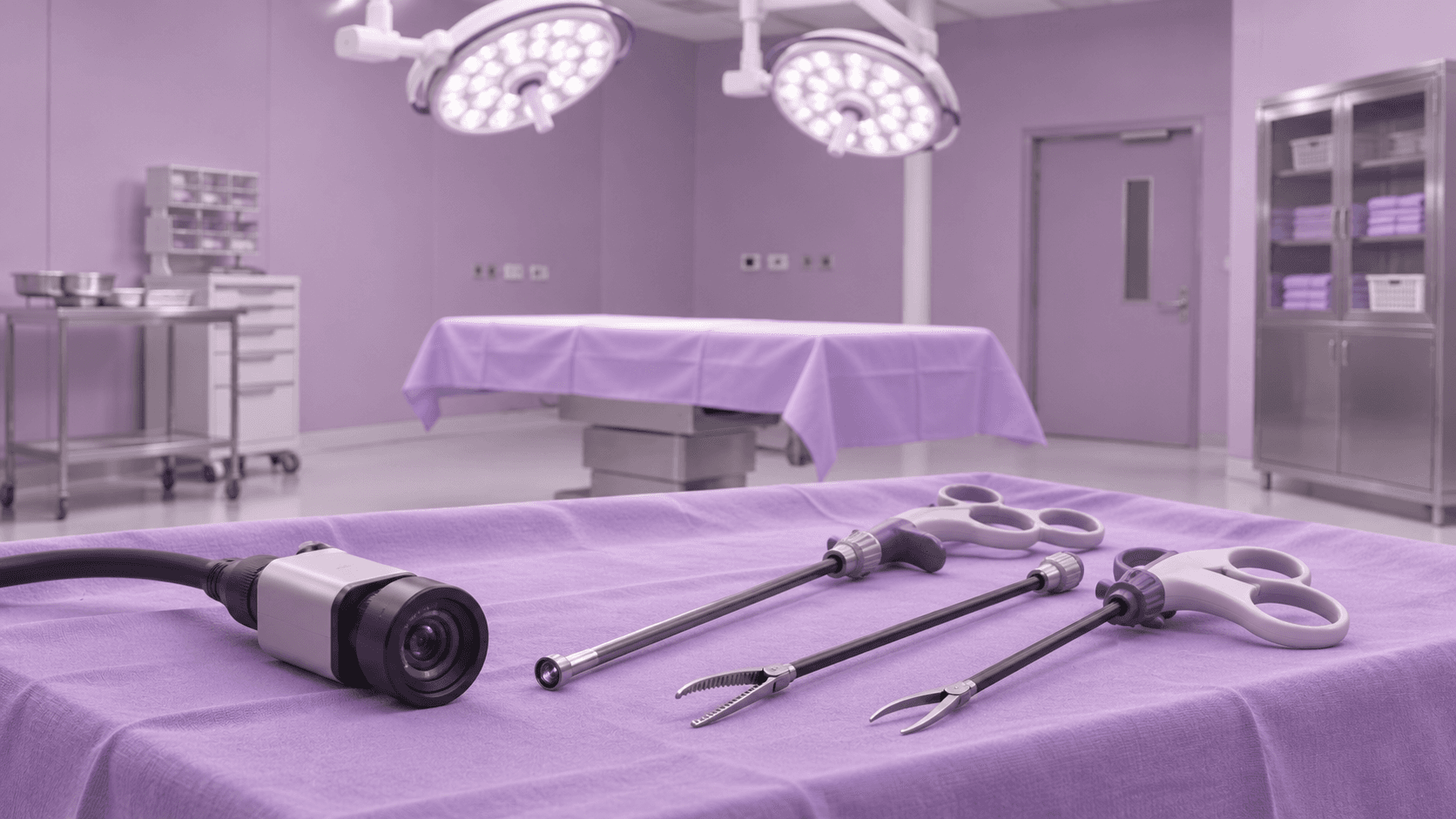
vNOTES (vaginal natural orifice transluminal endoscopic surgery) is a minimally invasive technique in which the camera and surgical instruments are introduced through the vagina, without any cuts on the abdomen. It can be used for hysterectomy, ovarian cysts, tubal surgery and some fibroid operations.
One of the most common questions from women interested in this method is: "I have had a caesarean section — can I still have vNOTES?" The short answer: often yes, but the decision requires careful assessment. This article explains how a caesarean affects vNOTES and what is taken into account in this situation.
What is vNOTES and how is it performed?
In vNOTES, a small opening is made at the top of the vagina to reach the abdominal cavity. A special access platform is placed in this opening, through which the camera and instruments are used. At the end of the operation the opening is stitched and no visible scar remains. For general information, see vNOTES.
Reported possible advantages include no abdominal scar and, in some studies, less pain and a shorter hospital stay. It is also important to know that the method is not suitable for every woman and requires individual assessment.
Why does a caesarean affect vNOTES?
During a caesarean, an incision is made in the lower part of the womb and the bladder is pushed down from this area. During healing, adhesions (tissues sticking together) can form here. In particular:
- Bladder adhered to the womb: The bladder may be firmly attached to the area of the caesarean scar.
- Womb adhered to the abdominal wall: In some women the womb becomes attached to the front abdominal wall.
- Multiple caesareans: The likelihood of adhesions generally increases with the number of caesareans.
In vNOTES, the surgeon works close to the bladder when entering from the front. For women who have had a caesarean, the key issue is therefore reducing the risk of bladder injury.
Is vNOTES safe after a caesarean section?
The medical literature includes studies and technical publications showing that vNOTES can be performed in women who have had a caesarean. For example:
- A series from Türkiye reported that vNOTES hysterectomy could be performed with low complication and conversion rates in women with large wombs, some of whom had previous caesareans.
- For women whose womb is attached to the abdominal wall, technical modifications such as a "lateral window" have been described, allowing the bladder area to be approached under direct camera view.
- Bladder-sparing manoeuvres, in which the womb is rotated to separate the adhered area more safely, have also been published.
- In women with dense abdominal adhesions from multiple caesareans, vNOTES has been reported as a reasonable alternative to abdominal access.
These data are encouraging but mostly come from small series and experienced centres. It therefore cannot be assumed that the outcome will be the same for every woman who has had a caesarean.
When might vNOTES not be suitable?
vNOTES is generally not preferred, or is evaluated very carefully, in the following situations:
- Dense adhesions behind the womb or deep endometriosis (closure of the space between the womb and the large bowel)
- Previous major surgery behind the womb or pelvic radiotherapy
- Active pelvic infection
- A very narrow vagina, or women who have never had sexual intercourse
- Large masses suspected of cancer that must be removed intact
Where endometriosis and adhesions are suspected, our Endometriosis page may be helpful.
Assessment before surgery
Before vNOTES is planned in a woman who has had a caesarean, the following steps are usually taken:
- Detailed history: Number of caesareans, whether they were complicated, other abdominal surgery
- Gynaecological examination: Mobility of the womb and suitability of vaginal access
- Ultrasound: Size of the womb, condition of the caesarean scar, relation to the bladder; if needed, a "sliding sign" test to assess adhesions
- MRI if needed: To clarify the anatomy in complex cases
What is taken into account during surgery
- The bladder area is approached under camera view as much as possible.
- The bladder is emptied at the start; if needed, fluid can be instilled into the bladder to define its borders.
- If safe progress is not possible, conversion to laparoscopy or open surgery may be made during the operation. This is not a failure but a decision taken for patient safety, and it should be discussed before surgery.
Risks and recovery
The general risks of vNOTES are similar to other gynaecological operations: bleeding, infection, bladder or bowel injury, and the need for conversion to open surgery. In women who have had a caesarean, the possibility of bladder injury receives extra attention because of adhesions. If an injury is recognised during surgery, it is usually repaired in the same session and a urinary catheter may be needed for a while.
During recovery:
- Most women get up and walk within a short time.
- Intercourse, tampon use and heavy lifting are paused until the vaginal stitches heal; your doctor will tell you how long.
- Light spotting may be expected.
A study examining pregnancy and delivery after fertility-sparing vNOTES operations reported that the posterior vaginal access site did not cause problems for pregnancy or vaginal birth. Previous vNOTES alone was therefore not considered a reason for caesarean delivery.
When should you see a doctor?
After surgery, contact your doctor or go to the emergency department without delay if you have:
- Fever, chills
- Heavy vaginal bleeding
- Inability to pass urine, heavy blood in the urine or urine leaking from the vagina
- Increasing abdominal pain or abdominal swelling
If you are considering surgery and have had a caesarean, it is advisable to see a specialist with your examination and imaging results to determine the right method. For details on vNOTES for fibroids, see vNOTES Fibroid Surgery.
Conclusion
A previous caesarean section is not, on its own, a barrier to vNOTES. However, because of adhesions and the closeness of the bladder, pre-operative assessment, technical care and experience become even more important in these women. Every woman's anatomy is different; the most suitable method for you should be decided after your examination and imaging findings have been evaluated together and the alternatives and risks openly discussed.
Author: Assoc. Prof. Dr. Erkan Elçi, Obstetrician and Gynaecologist. Last updated: November 2026.
Frequently Asked Questions
I have had two or more caesareans. Can I have vNOTES?+
Can the bladder be injured during vNOTES after a caesarean?+
Can vNOTES be converted to keyhole or open surgery?+
Can I have a vaginal birth after vNOTES?+
When is vNOTES not recommended?+

This article is for general information only and does not replace an examination, diagnosis or treatment. Please consult a physician about your symptoms.