
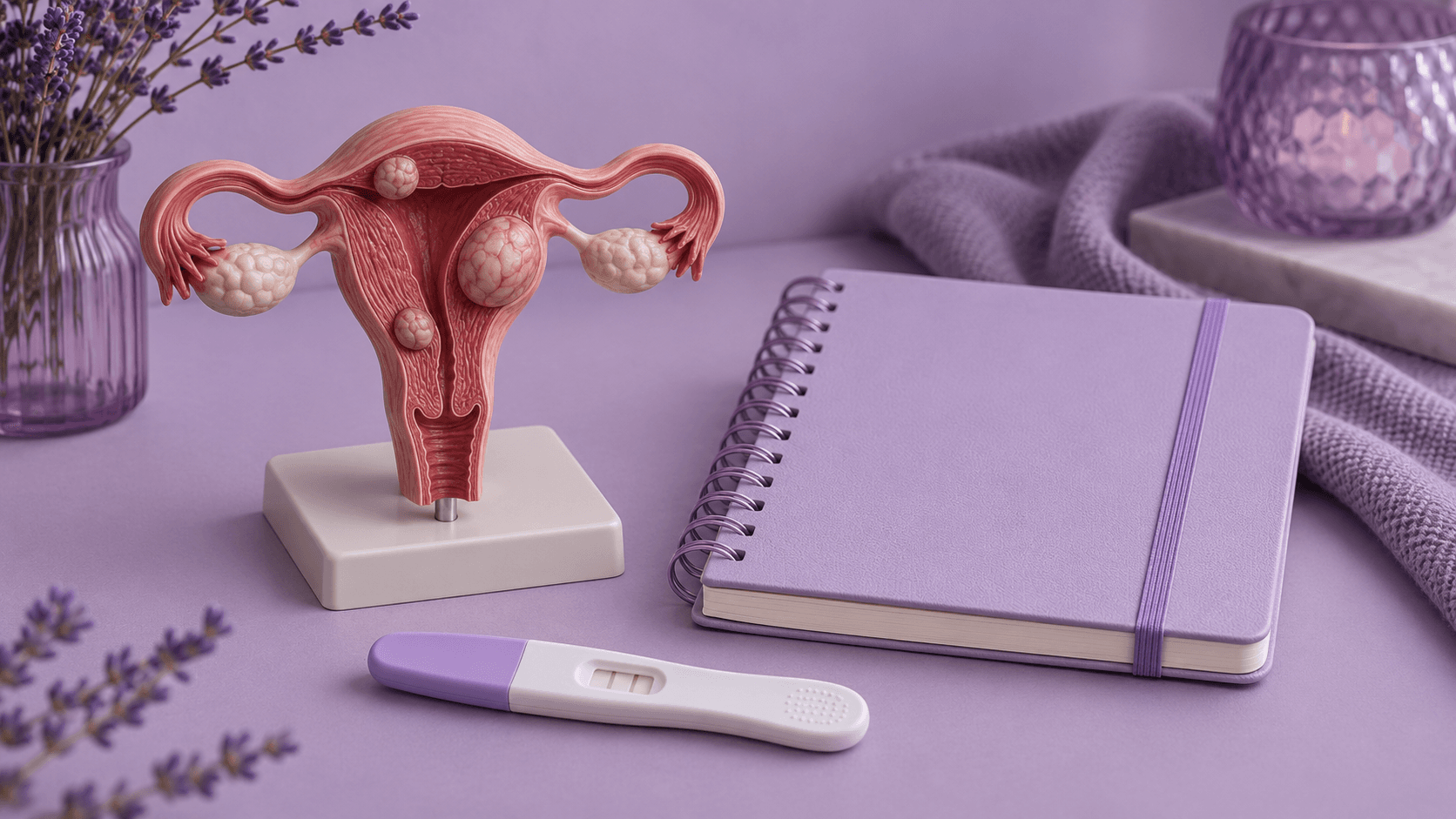
Fibroids (myomas) are benign growths of the womb muscle and are very common in women of reproductive age. When a fibroid is found in a woman planning a pregnancy, the first questions are usually: "Will this fibroid stop me getting pregnant?", "Do I need surgery?", "Can it harm my baby during pregnancy?"
The answers depend largely on where the fibroid is and how large it is. This article explains how fibroids affect the wish to conceive, the treatment options and what to know during pregnancy. For basic information, see What Are Fibroids?.
Why does the location of a fibroid matter so much?
Fibroids are divided into three main groups according to their position in the womb, and each affects pregnancy differently:
| Fibroid type | Location | Effect on conception |
|---|---|---|
| Submucosal | Grows into the womb cavity | The type most clearly shown to reduce the chance of pregnancy and increase miscarriage risk |
| Intramural | Within the womb wall | May have an effect if it distorts the cavity or is large; the effect of small ones is debated |
| Subserosal | Grows towards the outer surface of the womb | Usually does not affect the chance of conceiving |
In short, not every fibroid is a barrier to pregnancy. Fibroids that extend into the womb cavity and distort the area where the embryo implants need the most attention.
How do fibroids affect getting pregnant?
Fibroids affecting the womb cavity can make pregnancy harder by:
- Disrupting implantation of the embryo into the womb lining
- Changing blood flow and contractions in the womb lining
- Affecting the passage of sperm and egg if located near the openings of the tubes
Other causes of infertility should always be investigated as well. For information on fertility assessment, see Infertility Treatment.
Is fibroid surgery needed before pregnancy?
This decision is individual, but the general approach is:
- Submucosal fibroids: According to assessments by bodies such as the American Society for Reproductive Medicine (ASRM), removing fibroids that distort the womb cavity by hysteroscopy may improve the chance of pregnancy. This procedure is performed through the cervix without abdominal incisions. For details, see Hysteroscopic Surgery.
- Intramural fibroids: If they do not distort the cavity, cause no symptoms and are not large, surgery is generally not recommended. Surgery may be discussed for large, symptomatic fibroids or those possibly linked to repeated IVF failure.
- Subserosal fibroids: As they usually do not affect conception, they are generally monitored if there are no symptoms.
When surgery is needed, the aim is to remove only the fibroids while preserving the womb (myomectomy). This can be done laparoscopically, robotically, by vNOTES or by open surgery. For options, see Uterus-Preserving Fibroid Surgery.
Risks of surgery and things to consider
Possible risks of fibroid surgery include bleeding, infection, adhesions inside the womb and fibroids recurring over time. If the womb wall was opened deeply, uterine rupture in later pregnancies is considered a rare but serious risk. Therefore:
- A waiting period before trying to conceive is recommended after surgery; your doctor will decide the length based on the extent of the operation.
- The mode of delivery is decided taking the surgical details into account; in some women who had deep repair of the womb wall, a planned caesarean may be recommended.
Can fibroids cause problems during pregnancy?
Most women with fibroids have an uncomplicated pregnancy. A recent review published in the journal of the International Federation of Gynecology and Obstetrics (FIGO) stated that most pregnancies proceed without complications, but that problems can occur in some pregnant women with fibroids. The risk increases especially when:
- The fibroid is larger than 5 cm
- There are multiple fibroids
- The fibroid is in the lower part of the womb or beneath the placenta
Possible problems include:
- Pain (red degeneration): The fibroid's blood supply may be disrupted during pregnancy, causing severe pain. It usually settles with rest and pain relief recommended by your doctor.
- Increased risk of preterm birth
- Breech position of the baby
- Low-lying placenta (placenta praevia) or placental abruption
- Higher likelihood of caesarean section
- Increased risk of bleeding after birth
Fibroids may grow during pregnancy, especially in the first months, but not every fibroid grows.
For information on high-risk pregnancy care, see High-Risk Pregnancies.
Is fibroid surgery done during pregnancy?
Fibroid surgery during pregnancy is performed very rarely and only when unavoidable. Removing a fibroid during a caesarean (caesarean myomectomy) is generally not recommended because of the risk of bleeding, and is only considered in selected cases.
Can you have a vaginal birth with fibroids?
Yes. Most women with fibroids can give birth vaginally. A caesarean is usually performed for standard obstetric reasons (for example the baby's position or a fibroid blocking the birth canal), not because of the fibroid itself.
When should you see a doctor?
- If you are planning a pregnancy and know you have fibroids, have an assessment before conceiving.
- If you have not conceived after one year of regular intercourse (six months if you are over 35), seek advice.
- During pregnancy, seek emergency care without delay if you have:
- Vaginal bleeding
- Severe or increasing abdominal pain
- Regular contractions or leaking fluid
- Reduced baby movements
Conclusion
Fibroids are not always a barrier to pregnancy. Fibroids extending into the womb cavity can reduce the chance of pregnancy, and this effect can often be addressed with treatment; fibroids growing outwards from the womb can usually be monitored. Most pregnant women with fibroids have a healthy pregnancy, although closer monitoring is needed in some cases. If you are planning a pregnancy, seeing a specialist who can assess the location and size of your fibroids together with your wish to conceive is the first step in finding the right path for you.
Author: Assoc. Prof. Dr. Erkan Elçi, Obstetrician and Gynaecologist. Last updated: November 2026.
Frequently Asked Questions
I have fibroids. Can I get pregnant?+
Should I have my fibroid removed before trying to conceive?+
How long after fibroid surgery can I get pregnant?+
Can fibroids harm the baby during pregnancy?+
Can a woman with fibroids have a vaginal birth?+

This article is for general information only and does not replace an examination, diagnosis or treatment. Please consult a physician about your symptoms.